
How Much Does a Dumpster Rental Cost in Quincy, IL?
A straight answer on what a roll-off dumpster actually costs around Quincy, what pushes the price up or down, and how to avoid getting hit with fees you didn't see coming.
ReadRenovation guide
Plaster, lath, and old hardwood from a pre-1900 brick home don't behave like modern renovation debris. Here's what that means for dumpster size and what to know about older building materials before you start tearing into walls.

Quincy has one of the more intact stretches of 19th-century housing stock in this part of the Midwest, and nowhere is that more visible than the South Side German Historic District, where blocks of brick rowhouses and single-family homes — many built before 1900 — are seeing steady renovation work today. Older brick homes come with a different set of debris problems than a typical 1990s remodel, starting with the fact that the materials themselves are heavier and, in some cases, regulated. This guide walks through what actually comes out of these houses during a renovation, how that changes dumpster sizing, and what the rules say about older building materials before you start opening up walls.
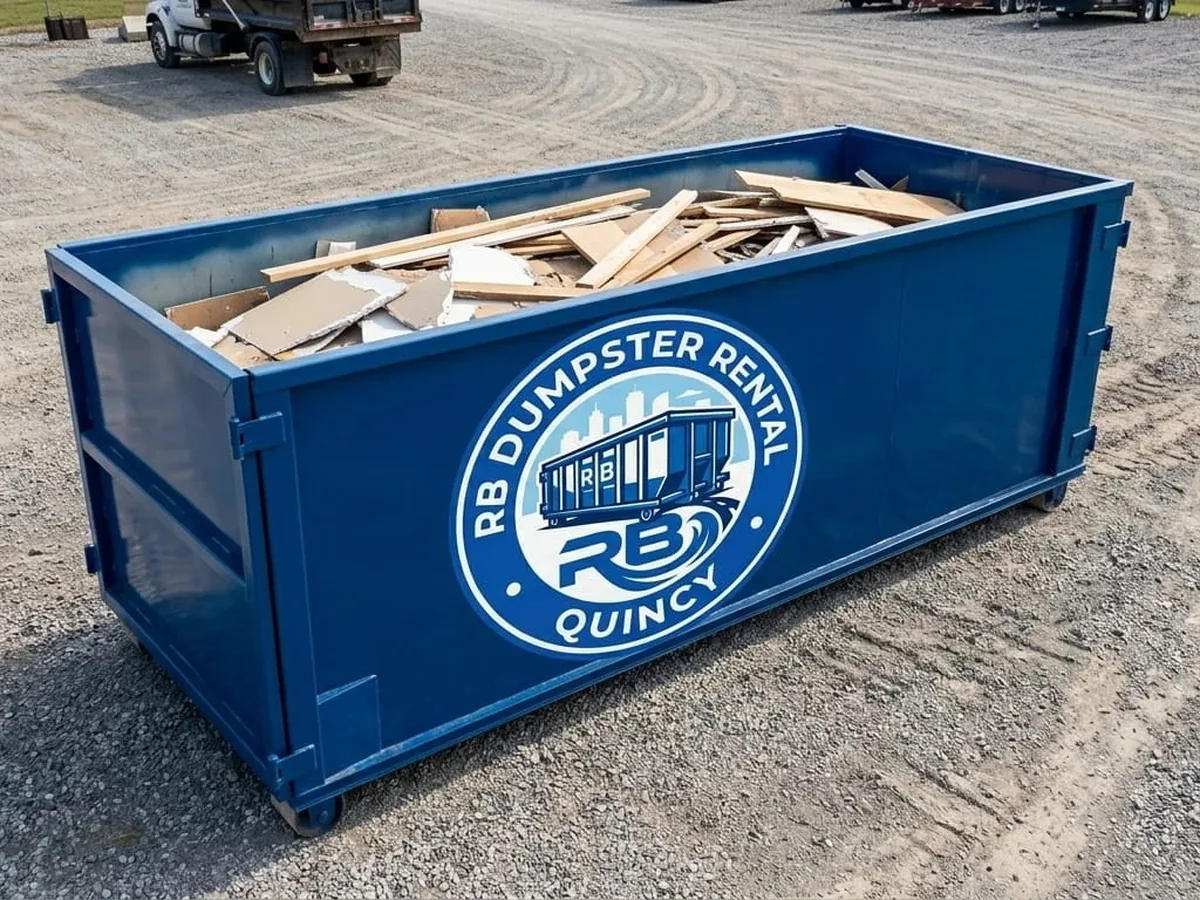
If your home was built before roughly the 1940s, the walls are almost certainly plaster over wood lath rather than drywall, and that distinction matters more than most homeowners expect going in. A modern drywall tear-out is bulky but relatively light. Plaster and lath is dense — a wheelbarrow load of plaster debris weighs noticeably more than the same volume of drywall — which means a room-by-room demo of original plaster walls fills a dumpster's weight limit well before it fills the container's visible space. This is the single most common surprise on older-home projects: the container looks half empty and is already at its weight cap.
Original hardwood flooring in a pre-1900 home is often thicker, denser old-growth material than what's sold today, and it's frequently layered under one or two later flooring installations from past decades of updates. Pulling all of that up at once — original hardwood, subfloor patches, and whatever vinyl or carpet got added later — adds up fast in both weight and volume. Nails, tack strips, and old adhesive residue also mean flooring debris takes up more room than it seems like it should once it's stacked rather than laid flat.
This is the part of an older-home renovation that has to be handled correctly, not worked around. Homes built before 1978 — which describes the great majority of the housing stock in the South Side German Historic District and much of older Quincy — are commonly subject to rules around asbestos-containing materials and lead-based paint. Under Illinois and federal regulation, work that disturbs these materials above defined thresholds generally requires a licensed contractor and prior notification before demolition or renovation begins. This applies to things like old pipe insulation, certain floor tile and mastic, textured ceiling material, and layers of old paint on trim, siding, and plaster.
This is general informational background, not legal advice — if you're planning a renovation on a pre-1978 property and aren't sure whether a specific material is regulated, the right first call is a licensed asbestos or lead inspector, or your contractor, before demo starts. Once a material has been properly tested, cleared, or remediated by a licensed professional, the resulting debris can move through a standard dumpster rental like any other renovation waste. We're glad to talk through the debris and hauling side of a project at any point, but testing and abatement decisions need to come from a licensed inspector or contractor, not from a dumpster rental company.
Very few historic-home renovations happen in one pass, and sizing a dumpster for a phased project is different from sizing one for a single weekend cleanout. A few patterns that tend to hold true on these jobs:
If your project is less about tear-out and more about clearing out a full house — an inherited property, a long-owned family home going up for sale — that's a different job with different sizing needs, and our estate cleanout service page covers that side of things in more detail. Our full lineup of container sizes is on the sizes page if you want to compare options directly.
Because the South Side German Historic District carries historic-district status, exterior changes to these homes — brick repair, window replacement, roofline work — sometimes involve a review process beyond a standard building permit, separate from anything related to debris hauling. That's worth checking with the city's planning office early in a project, well before a dumpster is even part of the conversation, since it can affect project timeline more than it affects sizing. Interior renovation work generally doesn't trigger the same review, which is part of why so much of the interior updating happening in the district right now is plaster, flooring, and mechanical-system work rather than exterior changes.
A few practical notes specific to these properties: many homes in this part of Quincy sit close to the street with narrow or short driveways, some with no driveway at all, so placement is worth discussing up front. Row-style homes in particular may need the container placed at the curb rather than on the property. When you call to book, let the crew know the home's approximate age, what's being torn out, and whether asbestos or lead testing has already been done or is planned — that's enough for us to recommend the right size and plan for the weight the job is actually going to produce.
Talk to a real person
Call (217) 860-6534 and describe the job. Flat price, stated tonnage allowance, and a delivery window on the same call.
Mon–Sat 7:00am – 7:00pm
From this guide
Plaster and lath is significantly denser than modern drywall, so it hits a container's weight limit long before it fills the visible space. Older-home demo projects usually need a container with a higher weight allowance, not just more cubic yards, and full-house tear-outs often take more than one pull.
Homes built before 1978 are commonly subject to asbestos and lead-paint rules, and work disturbing those materials above defined thresholds generally requires a licensed contractor and prior notification. This is general information, not legal advice — a licensed asbestos or lead inspector is the right resource for a specific property before demo starts.
Once materials have been properly tested, cleared, or remediated by a licensed professional, the resulting debris can go through a standard dumpster rental like any other renovation waste. Untested or unremediated regulated materials should not go into a standard container.
A single room of plaster demo, old flooring, and trim often fits a 15 yard container, weight allowance permitting. Whole-floor or whole-house projects typically need to step up in weight capacity, and multi-phase renovations often work better as a series of shorter rentals than one long-sitting container.
Keep reading
A straight answer on what a roll-off dumpster actually costs around Quincy, what pushes the price up or down, and how to avoid getting hit with fees you didn't see coming.
ReadMost household and construction debris is fine in a roll-off, but a handful of everyday items can shut down a pickup fast. Here's what's allowed and what isn't around Quincy.
ReadPlacing a dumpster on your own driveway generally doesn't require a permit in Quincy. Placing one in the street is a different story, and there's a real city rule that covers it.
Read